Ten Seconds at Your Gate: What Your Front Garden Tells a Courier Before They've Even Knocked

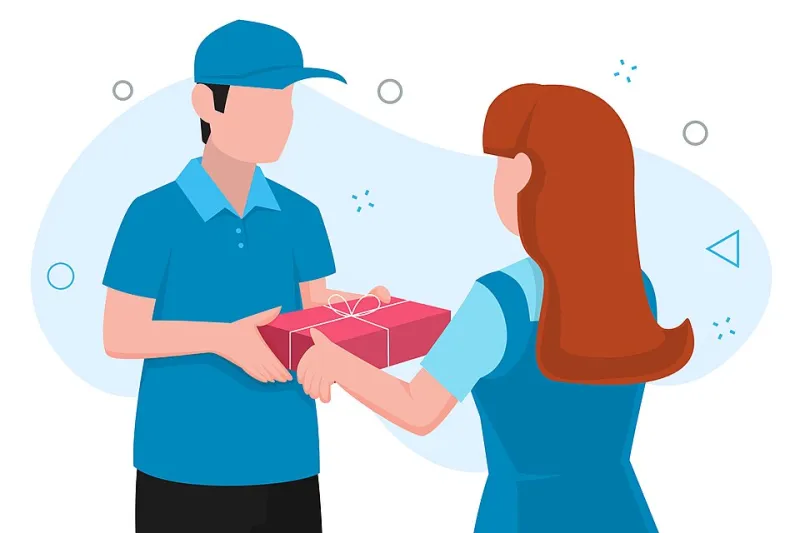
Photo: Meanwell Packaging, CC BY 2.0, via Wikimedia Commons
Every parcel in Britain ends the same way: a driver, a gate, and about ten seconds to decide how this is going to go. Those ten seconds are more important than most of us realise. They determine whether your order lands safely on the doormat, gets lobbed over a fence into a wet flowerbed, or vanishes into the great limbo of 'attempted delivery — card left'.
We spoke to couriers, warehouse planners and a few long-suffering drivers' mates about what actually happens at the door — and why some UK addresses are a dream while others make a grown driver sigh audibly from the van.
The Ten-Second Assessment
A driver approaching your home is running a silent risk assessment. Can they see the door from the street? Is there somewhere obvious and sheltered to leave a parcel? Are there loose dogs, locked gates, or a stairwell with fourteen flats and no nameplates? All of this gets processed before they've even parked.
Housing style plays a huge part. A Victorian terrace in Leeds with a direct pavement-to-door path is arguably the easiest delivery in the country: door visible, no gate, neighbourly witnesses everywhere. Compare that with a gated new-build estate in Essex, where the gate code changes monthly, the house numbers start at 47 for reasons nobody can explain, and the 'front garden' is a two-metre strip of gravel open to the pavement. Same country, completely different job.
Scotland's Shared Closes and the Stairwell Lottery
Ask any courier about Glasgow tenements and you'll usually get a long exhale followed by the word 'closes'. Traditional sandstone tenements often have six or eight flats behind one unlocked door, up one flight of stairs or four. Nameplates are optional. Buzzers are frequently decorative.
The result is the stairwell lottery: a driver carrying a 20kg box up two flights, scanning for a name that isn't there, then making a judgement call about which door it probably belongs to. When it goes well, a neighbour takes it in and everyone's happy. When it doesn't, parcels migrate — flat 2/1's delivery becomes 3/2's problem — and the 'where's my order?' tickets start flying.
Contrast that with a detached semi in Solihull with a porch, a side gate and a visible doorstep. That's a two-minute job, start to finish.
The Garden Gate Test
So where does your home rank? Score one point for each 'yes':
- Can the front door be seen from the street? If a passer-by can watch someone approach your door, opportunistic theft drops sharply.
- Is there sheltered cover near the door? A porch, overhang or covered recess means parcels survive rain — a genuine consideration in a country where it drizzles eleven months of the year.
- If you have a gate, is it unlockable or codeless? A locked gate with no easy access is the single biggest delivery-killer in suburban Britain.
- Is your house number visible from the road, day and night? Peeling numbers on a rusty plaque don't count. Neither does the beautiful wrought-iron sign with a font only readable at two paces.
- Do your delivery instructions actually work? 'Leave behind the bin' only scores if the bin is always there and the behind of it is accessible.
Score 4–5: Courier's dream. Drivers probably fight over your stop. Score 2–3: Workable, but you're relying on luck and kind neighbours. Score 0–1: Congratulations, you're the reason someone's parcel got 'attempted' three times.
Quick Fixes That Genuinely Work
The good news: almost nothing on that list costs serious money. A £12 solar house number plate solves problem four overnight. A cheap plastic weatherproof delivery box by the door answers both shelter and visibility. Adding clear delivery notes to your retailer profile — gate codes, safe spots, 'please don't post through letterbox, it will eat it' — takes ninety seconds and saves a driver ten minutes of guesswork.
And if you're in a flat with a temperamental buzzer? A collect point or parcel locker nearby might honestly beat your own doorstep. Plenty of drivers would agree with you.
What Retailers Could Learn From the Worst Offenders
Here's the part that frustrates drivers most: none of this is secret. Retailers and their courier partners know exactly which postcodes and property types generate failed deliveries, damage claims and 'not received' disputes — the data exists, down to the individual street. Yet delivery options at checkout remain stubbornly one-size-fits-all: a box, a date, and hope.
The worst offenders are the big new-build developments: hundreds of near-identical homes, numbered by a planner with a sense of humour, often with communal entrances and no parcel infrastructure at all. Compare that with the humble corner shop collect point, which quietly solves every problem on the list — shelter, security, a human being who knows the neighbourhood. It's telling that the 'failing' addresses are often the newest ones.
A checkout that asked 'flat in a shared close? Try a locker for £1.99' would cut failed deliveries overnight. Until then, the ten-second assessment at your gate remains the most important moment in the entire delivery chain — and the only part of it you can actually control.
Go on. Score your gate. Be honest about the bin.