Pedal Power: How Cargo Bikes Are Quietly Winning the City Delivery Race
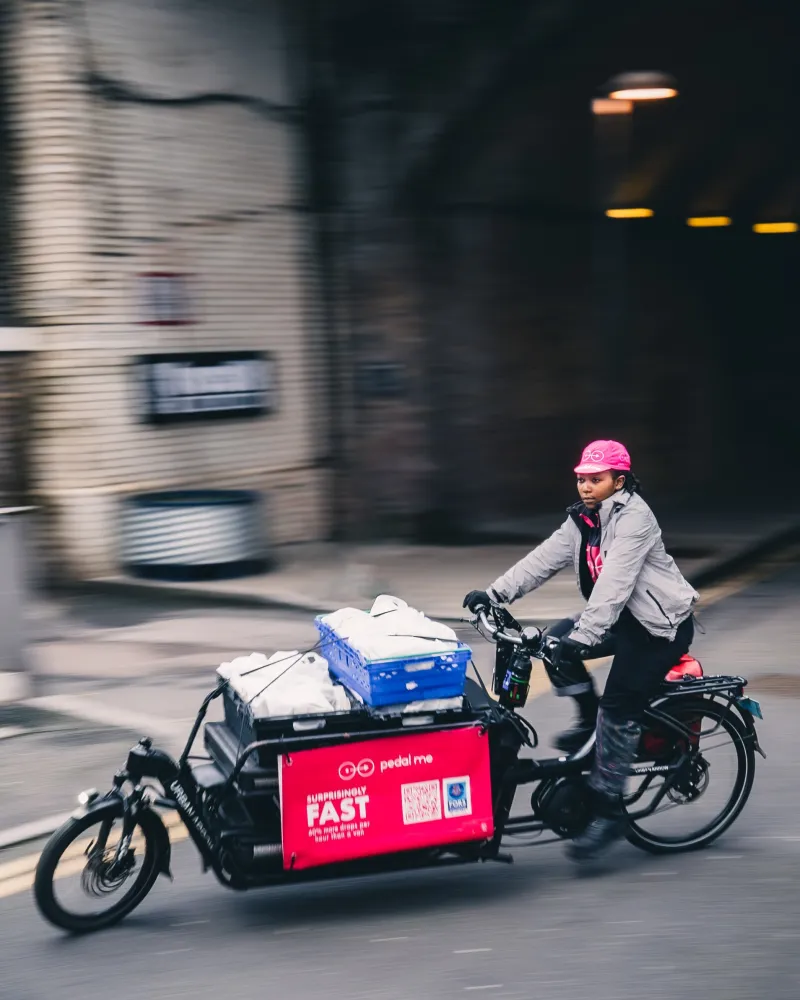
Photo: electric cargo bike delivery courier city street UK, via images.squarespace-cdn.com
There's a moment on a Tuesday morning in Hackney when you realise the delivery landscape has changed. A courier glides past a queue of idling vans, swings a bike — one roughly the size of a small caravan — up to a doorstep, and has three parcels handed over before the driver two cars back has found a parking space.
Welcome to the cargo bike era. And if you live in a UK city, chances are your last order travelled part of the way on two wheels without you noticing.
Not Your Nan's Shopping Bike
Let's clear something up first: these aren't delivery riders with a rucksack. Modern cargo bikes are electric-assist machines with front-mounted boxes capable of swallowing up to 200kg of freight. Some look like a skip with pedals. Others resemble a wheelbarrow that's had ideas above its station.
The batteries mean a rider can haul a full load up a Bristol hill without arriving looking like they've done a spin class. Top out around 15.5mph — the legal limit for e-assist in the UK — and in city traffic, that's genuinely competitive with a van.
Often faster, actually. Which is the bit that surprised us.
The Maths That Convinced the Retailers
Here's the thing about central London, Manchester city centre or Bristol old town: vans are a nightmare. Congestion charges, clean air zones, parking tickets, and the simple fact that a driver spends most of their day walking back and forth from a spot three streets away.
A cargo bike, by contrast, can park on the pavement (within reason), roll right up to the door, and do 30-40 drops a day in a dense urban patch. No fuel. No ULEZ charge. Insurance costs a fraction of a van policy.
One courier we spoke to in Manchester put it bluntly: "In the city centre, I'll do the same drops as a van driver and finish an hour earlier. And I've not circled the Northern Quarter four times looking for a space."
For retailers, the economics stack up once deliveries cluster in a tight radius. Beyond that, vans still rule the motorway miles. Which is why the smartest operations now use a hybrid model: big lorries bring stock to a city micro-hub, then cargo bikes take it the final few miles.
What It Means for Your Delivery
If you're a shopper, the changes show up in small ways:
- Quieter doorsteps. No engine idling outside at 7am.
- Cleaner air. Cargo bikes produce zero tailpipe emissions on the last leg — a big deal in cities like Bristol, where air quality has been a long-running local battle.
- Fewer "sorry we missed you" cards. Bikes can often wait a minute or two at the door rather than risking a parking ticket.
- Smaller drops per trip. Your parcel might arrive in the afternoon window rather than a vague all-day slot, because a bike can only carry so much.
Who's Delivering by Bike Already
You may have had a bicycle delivery without realising it. Major players now run cargo fleets or partner with bike couriers in urban areas:
- Several large online retailers use cargo bikes for inner-city London and Manchester postcodes
- Grocery deliveries — particularly rapid grocery services — are overwhelmingly bike-based in cities
- Pharmacy and small-parcel services in Bristol have been early adopters, partly thanks to the city's cycling infrastructure
The pattern is consistent: the denser the delivery area, the more likely your parcel arrives pedal-powered.
The Limits of the Revolution
Let's not oversell it. A cargo bike can't deliver your sofa. Rural deliveries — the long single-track roads of Somerset or the Pennines — remain firmly van territory, and probably always will. Winter in Glasgow tests even the most committed rider. And while e-assist flattens hills, a rider's daily range is still finite.
There's also a human cost worth acknowledging. Courier work on a bike is physically demanding even with electric help, and the industry has faced justified scrutiny over pay and conditions. A greener delivery isn't automatically a fairer one.
The Road Ahead
Councils are nudging things along: more secure bike parking, cargo-bike-friendly infrastructure, and in London, exemptions from certain charges that vans can't dodge. Meanwhile, the micro-hub model keeps expanding — small warehouses springing up in railway arches and disused retail units, purely to serve as handover points between lorries and bikes.
The likely future isn't bikes replacing vans. It's a sensible split: vans for the long haul and bulky items, bikes for the dense final miles. For city shoppers, that means faster, quieter, cleaner drops — and for the courier grinding up Park Street in Bristol with 80kg in the box, at least the bike is doing some of the work.
Next time your parcel arrives with a slight wobble and a friendly nod, spare a thought for the rider. They've probably beaten three vans and a congestion charge to get to you.