Number 14 or Number 41? What Really Happens When Your Parcel Lands on the Wrong Doorstep

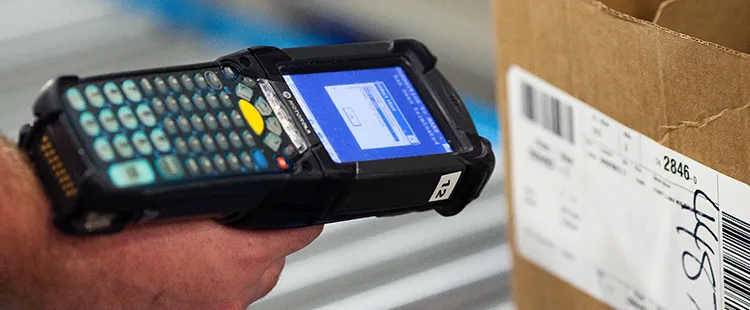
Photo: Meanwell Packaging, CC BY 2.0, via Wikimedia Commons
There's a particular kind of modern heartbreak in opening the courier's app, seeing the words 'Delivered — left in porch', and looking out at a completely empty porch.
If it's happened to you, take comfort: you're in very good company. Misdelivery is one of the most common — and least talked about — snags in the UK's delivery boom. And the strange thing is how often the story ends well, provided you know what you're doing in the first hour.
Why It Happens More Than You'd Think
Talk to anyone who's done a delivery round and the same culprits come up again and again. House numbers that haven't seen a fresh coat of paint since the Blair years. Streets that fork into two halves with the same name. New-build estates where the postcode covers forty houses and the sat nav gives up halfway. Flats where '2B' could mean the second floor or the second house on the left, depending on who you ask.
Then there's the human factor. A driver with 180 stops, a van that's a Tetris puzzle, and a label that's been torn or smudged. Most misdeliveries aren't carelessness so much as arithmetic: at that pace, even a 2% error rate means a few parcels a week landing at the wrong door.
The classic confusion is the transposed number — 41 instead of 14, 87 instead of 78. On a dim evening in November, with the street lights on and a photo to take before the next stop, it's an easy slip.
The Neighbour Question: Keep, Return or Ignore?
So your parcel is at number 14, and you're number 41. What happens next depends enormously on who lives at number 14.
Most people, to their credit, do the decent thing. They spot the wrong name, clock the wrong house number, and either post it through your door or leave a note. A surprising number of misdeliveries are resolved within 24 hours by nothing more than a neighbour with a conscience and a short walk.
But not everyone. Some parcels sit in hallways for weeks. A few are opened — 'I thought it was mine' is the oldest excuse in the book — and some vanish entirely. Legally, if goods arrive at your address by mistake, you're expected to take reasonable care of them and allow collection. Keeping something you know isn't yours isn't a loophole; it's simply theft.
What to Do in the First Hour
Here's the practical bit, and the order matters:
- Check the photo. Nearly every major courier now snaps proof of delivery. Zoom in. That door number, that porch, that blue recycling bin — it's usually enough to identify the house.
- Do a quick street sweep. Houses with similar numbers, across the road, round the corner. Most misdeliveries land within a few doors of home.
- Leave a polite note. 'Hi — courier's left a parcel at your address by mistake, could you pop it round to number 41? Thanks!' Non-accusatory notes get far better results.
- Contact the retailer, not just the courier. This is the step people get wrong. Your contract is with the shop you bought from, and under the Consumer Rights Act they're responsible for getting goods to you. If the parcel is genuinely lost in a misdelivery, the retailer chases the courier — not you.
- Give it a sensible window. Retailers typically ask you to wait a set period (often a few working days) in case the parcel is recovered or a neighbour returns it. After that, they should replace or refund.
Keep a note of dates and reference numbers. It rarely comes to a dispute, but a paper trail makes the retailer's job — and yours — much simpler.
Behind the Scenes: The Trace Process
Once you've reported a misdelivery, an internal machine kicks into gear that most shoppers never see.
First, the delivery scan data gets checked. GPS pins attached to the 'delivered' scan will show roughly where the parcel actually landed — often accurate to within a few metres. If that pin sits at number 14 instead of number 41, the case is essentially solved before a human picks up the phone.
Next comes the depot. The driver's handheld records the stop sequence, so the depot can work out who was on that street that day. Many couriers will simply knock on the door at the GPS pin the next time they're on the round and ask for the parcel back. It's awkward, it happens weekly, and most drivers have a well-practised friendly script for it.
If the parcel can't be recovered, it gets logged as lost, and the retailer eats the cost — which is exactly why shops are increasingly pushy about accurate address formats at checkout. Every misdelivered parcel costs someone money, and it's rarely the courier who ends up paying.
Making Your Address Harder to Get Wrong
A few small habits dramatically cut your odds of a doorstep mix-up:
- Make your house number visible. Large, reflective, ideally lit. It sounds trivial; it genuinely is the single biggest fix.
- Add a delivery instruction. 'Blue front door, number 41, gate on the left' gives a driver context a label never will.
- Use what3words or a safe place if your street is confusing — lots of UK couriers support both now.
- For flats, include the building name as well as the flat number. Postal districts are full of identical-sounding blocks.
- Watch renamed streets. If your road was redeveloped and the old name still floats around online, update your saved addresses everywhere.
The Takeaway
A parcel on the wrong doorstep feels like a disaster in the moment, but it's usually a detour rather than a disappearance. Check the photo, knock on a door or two, and let the retailer do the chasing if it doesn't turn up. The system — neighbours, drivers, depot traces — is better at recovering wayward parcels than most of us give it credit for.
And if you're the one holding a parcel that isn't yours? You already know what to do. Number 41 is only three doors away.