Midnight Click, Seaside Wake-Up: How One Order Stirs a Small Coastal Town
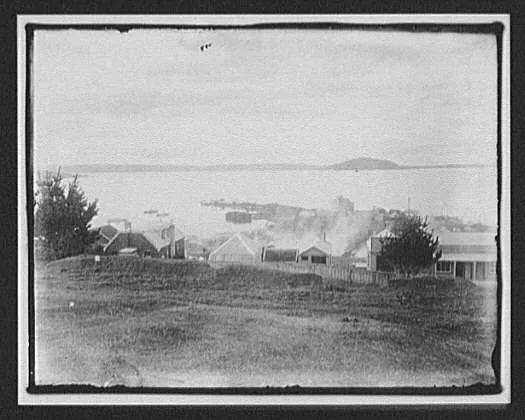
Photo: William Henry Jackson, Public domain, via Wikimedia Commons
It's 12:03am on a Tuesday when someone in Leeds decides they need solar garden lights. Not tomorrow — now. They tap 'buy', their phone screen glows in a dark bedroom, and somewhere on the Yorkshire coast, a small town begins to stir.
We've fictionalised the town — call it Marsden Bay, a stretch of pebbled beach, two chippies and a harbour wall — but the story it tells is true up and down the British coastline. Online shopping isn't just a big-city machine of mega-warehouses and motorway hubs. In dozens of small coastal towns, it's the difference between a high street with lights on and one that's gone dark.
The Receipt That Rings an Alarm
Back to our Leeds shopper. Their order lands on the servers of a fulfilment company whose regional hub sits on a low industrial estate a ten-minute walk from the seafront. The confirmation email whooshes out at 12:04am. Nobody reads it. But at 4:45am, that receipt — along with 1,100 others from the overnight queue — becomes a picking list.
Dave Okafor, the hub's shift manager, has run the site for six years. "People think the coast switches off at night," he says, nursing a flask of tea in the loading bay. "We're the opposite. Midnight's our busiest hour. Everyone's in bed scrolling, and every scroll is work for us."
By 5:15am, the lights are on across the estate. The first van of the day — a battered Transit with a surfboard rack left over from its previous owner — pulls out at 5:50am, headlights sweeping across the harbour.
Seasonal Hands, Year-Round Payroll
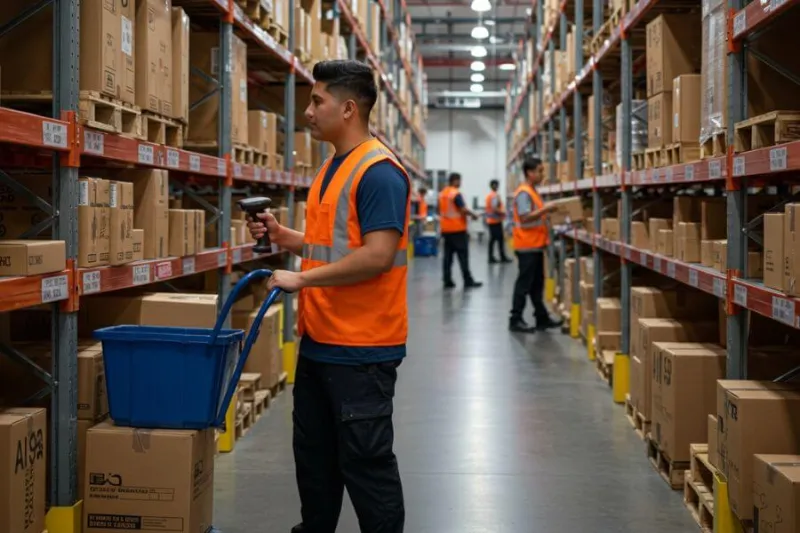
The solar lights sit on shelf C-14, in an aisle patrolled by Josie, 24, a seasonal packer who came home from university in May "for the summer" and never quite left. She's one of eleven temporary staff the hub takes on between April and September, when tourism jobs dry up and online orders spike.
"In a seaside town, your options are hospitality or nothing in winter," Josie says, folding a cardboard box in four seconds flat. "This place keeps the money local. My mum did the same job in the nineties for a catalogue company. It's just moved online."
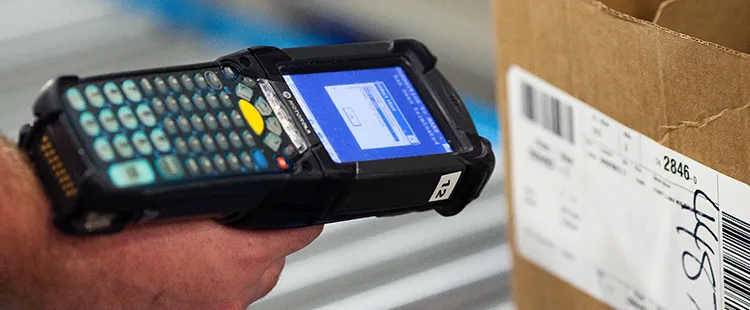
That's the quiet truth behind the regional e-commerce economy: fulfilment work is the modern descendant of the mail-order warehouses that once anchored market towns. Same shelves, same trolleys, different till. When an order lands at midnight, it's not an algorithm doing the work — it's Josie, a scanner gun and a box that'll be taped shut before most of Britain has put the kettle on.
Our solar lights are picked at 6:12am, packed at 6:20am, and on a courier's van by 7:05am. The 6am sales receipt isn't a metaphor. It's a shift pattern.
Flat Whites for the Depot Crowd
Two streets from the hub, The Slipway café opens at 6:30am. Owner Megan Rhodes used to rely on dog walkers and summer tourists. Now her first wave of customers wears hi-vis.
"The depot changed everything," she says. "I used to take £40 before ten o'clock on a good day. Now it's £120, and half of it's depot workers — teas, bacon rolls, meal deals for lunch. If that hub ever closed, I'd feel it within a week."
Megan's story repeats itself across coastal Britain, from Whitstable to Wick. Where a fulfilment centre or courier depot opens, nearby cafés, newsagents and petrol stations see an early-morning trade that simply didn't exist before. Economists call it induced local spend. Megan calls it "the roll money."
Vans, Routes and the Last Half Mile
By 8:30am, our parcel is on a delivery route that curls through the town like string around a Maypole. The driver — self-employed, like most — knows which porches have parcels boxes, which gates stick, and which holiday lets are empty until August.
Coastal routes are odd beasts. Long gaps between houses, single-track lanes, the occasional farm gate. But they also mean something else: these jobs can't easily be centralised. You can't deliver to a coastal village from 40 miles inland without someone local in the driving seat. That's a job, anchored to a place, that automation can't easily reach.
At 1:47pm, the solar lights land on a doorstep in Leeds. Total journey: under 14 hours. Total people touched: eleven, from Dave's overnight triage to Josie's packing tape to Megan's till roll.
The Tide That Lifts More Than Parcels
It's fashionable to frame e-commerce as the enemy of local economies — the thing that emptied the high street. But in towns like our fictional Marsden Bay, the picture is more tangled. The shops went, and in their place came shifts, vans and bacon rolls. Different work, same paycheck, spent at the same pubs.
So next time you hit 'buy' at midnight, spare a thought for the ripple. Somewhere, likely near the sea, a light just flicked on.