The Vanishing Parcel Playbook: Who Foots the Bill When Your Delivery Disappears
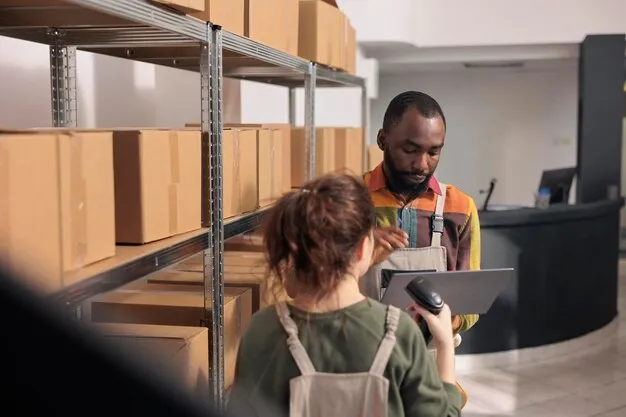
Photo: lost parcel delivery boxes warehouse searching, via img.freepik.com
It's the tracking status nobody wants to see: 'Out for delivery' — followed by absolutely nothing. Three days later, the app still insists your parcel is 'in transit', and you're starting to suspect it's enjoying a gap year somewhere in the Midlands.
Here's the good news: if you paid for something that never turned up, you're almost certainly entitled to your money back. The trick is knowing who to chase, what to say, and when to stop being polite about it.
First Things First: It's Not the Courier's Problem (Yet)
The single biggest mistake UK shoppers make is phoning Evri, Royal Mail or DPD first. Don't. Under the Consumer Rights Act 2015, your contract is with the retailer — not the courier. The shop you bought from is legally responsible for getting the goods to you in one piece and on time.
That means if your parcel vanishes between the depot and your doorstep, that's the retailer's loss, not yours. They can argue with their courier all they like behind the scenes; that's not your problem.
So step one is always: contact the seller. In writing, ideally through email or live chat so you've got a paper trail.
The Waiting Game: How Long Is Too Long?
Couriers are allowed a grace period before a parcel is formally declared lost. Most UK carriers operate on a window of roughly 10 to 20 working days from the expected delivery date before they'll admit defeat and open a lost-item investigation.
Retailers will often ask you to wait out this period first. It's frustrating, but it's not necessarily a stalling tactic — genuine tracing efforts do happen inside sorting hubs, where staff physically re-scan mislabelled parcels and check misrouted cages.
That said, you're not obliged to wait forever. If a retailer drags their heels past a reasonable window (say, 30 days), that's your cue to escalate.
Your Escalation Ladder
- Contact the retailer in writing. State clearly that the item hasn't arrived and that you'd like a refund or replacement. Keep it short and factual.
- Give them a deadline. Fourteen days is a fair ask. Mention that you're aware of your rights under the Consumer Rights Act.
- Request a Section 75 or chargeback. If you paid by credit card for anything over £100, Section 75 of the Consumer Credit Act lets you claim from your card provider. Debit card or PayPal? Chargeback works too — usually within 120 days.
- Go to ADR or the courts. Some retailers are signed up to alternative dispute resolution schemes. Small claims court is the final backstop, and it's cheaper than you'd think.
The Fine Print Nobody Reads
Watch out for retailers claiming delivery is only 'complete' when you've signed, or that a photo of your parcel on the doorstep counts as proof. In practice, UK courts have taken a dim view of retailers who treat a doorstep photo as conclusive evidence — especially if the item then walks off.
If a courier photographs your delivery and it's subsequently nicked, the dispute is between the retailer and the courier. Not you.
A Few Money-Saving Habits Worth Borrowing
- Pay by credit card for big orders. The joint-liability protection is free and powerful.
- Screenshot everything. Tracking updates, order confirmations, chat logs. Claims move faster with evidence.
- Don't accept a voucher as a first offer. Retailers love offering store credit; you're entitled to actual money.
- Check the sender's delivery terms before ordering. Some smaller shops quietly use untracked services. Knowing this upfront saves grief later.
Losing a parcel is annoying. Losing money over it is avoidable. Know your rights, put it in writing, and don't let a retailer fob you off with a discount code when what you're owed is a refund.